HC.01Chapter II
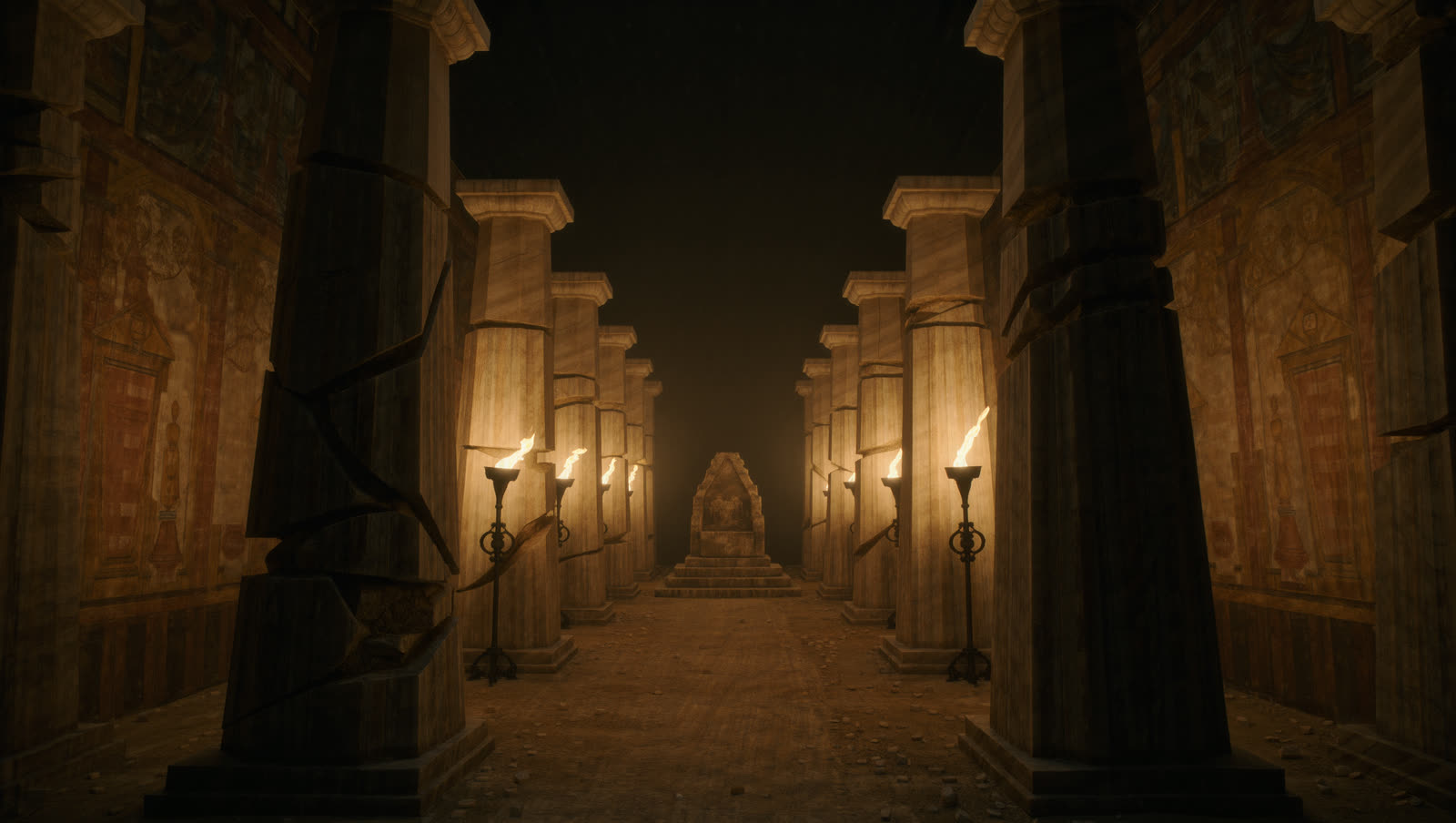
Twenty-four columns, still standing
Cedar cores dressed in lime plaster and bound with bronze straps. When the roof beams burned, the wet plaster shielded the wood inside. The columns held while the ceiling came down around them.
Ostrander Museum · 9 Oct 2026 to 21 Mar 2027
The throne hall of Amathar burned in 1177 BCE and was bricked up with its queen's seat still standing. Take the torch and walk it the way its excavators did in 1931, one lamp at a time.
Move to carry the torch · scroll to walkTouch to move the torch · scroll to walk
HC.01Chapter II
Cedar cores dressed in lime plaster and bound with bronze straps. When the roof beams burned, the wet plaster shielded the wood inside. The columns held while the ceiling came down around them.
HC.02Chapter III
Between the columns run 1,106 incised lines of palace accounts: jars of oil, measures of barley, the names of 212 servants. The final entry orders wine for a feast that was never served.
HC.03Chapter IV
The south fresco runs thirty metres. Every figure carries tribute: ivory, oil, a bolt of purple cloth. Where the queen should stand to receive them, the painter left a clean patch of plaster.
HC.04Chapter V
The limestone treads are dished two centimetres deep at the centre, pressed by three centuries of petitioners climbing to kneel. The torch brackets here are iron, not bronze: a late, hurried repair.
Set into the dais is a gold-lined socket shaped for a crown. It was clean of ash when the hall was opened, though the floor around it lay under a hand's depth of it. Someone lifted the crown out before the fire, and carried it into the dark.
Kellan survey, sheet 14 · beam sockets 1 to 8
The cedar ceiling fell in a single night. From the sockets cut into every capital, the 1931 survey measured each beam it once carried. Sweep the torch through the dark and the roof comes back, line by line.
The record
Everything in the hall is dated from three sources: the ledger wall, carbon from the burned roof, and the notebooks Ada Kellan kept by lamplight.
Twenty-four cedar trunks are floated down from the northern hills and set on basalt footings, a column for each month of two years of tribute.
One workshop paints the south wall in eleven days, working the wet plaster by lamplight. The blank patch where the queen should stand is original.
The roof burns in the same decade that palaces fall across the eastern Mediterranean. The doors are bricked up from the outside.
Surveyor Ada Kellan breaks the brick seal and records the hall by oil lamp, refusing electric light on the plaster. Her team finds the socket empty.
Rebuilt at full scale from 4,800 survey photographs and lit only by flame, it leaves its hill for the first time.
Ostrander Museum of the Ancient World
Choose a torch-lit entry. Places left are shown under each time.
Book the 14:30 entryNo phone screens inside the hall. Your torch is the only light.