Six routes, one atlas.
Pick one. The globe turns to it, and the dive follows it down.
6,620km long
5,280m deepest
250Tbps
2021laid
Fathom Line maps the cables that carry it. Turn the globe, pick a route, then scroll down one line to the sand it rests on.
Drag to turn, scroll to dive
Pick one. The globe turns to it, and the dive follows it down.
Halyard, 6,620 km
The camera leaves orbit and follows Halyard to its landing at Bude, UK. Scroll slower and the descent slows with you. Scroll back and you climb.
50.83° N 4.55° W
The cable comes ashore through a buried duct to a station the size of a garage. From here, repeaters every 70 km or so keep the light strong enough to cross.
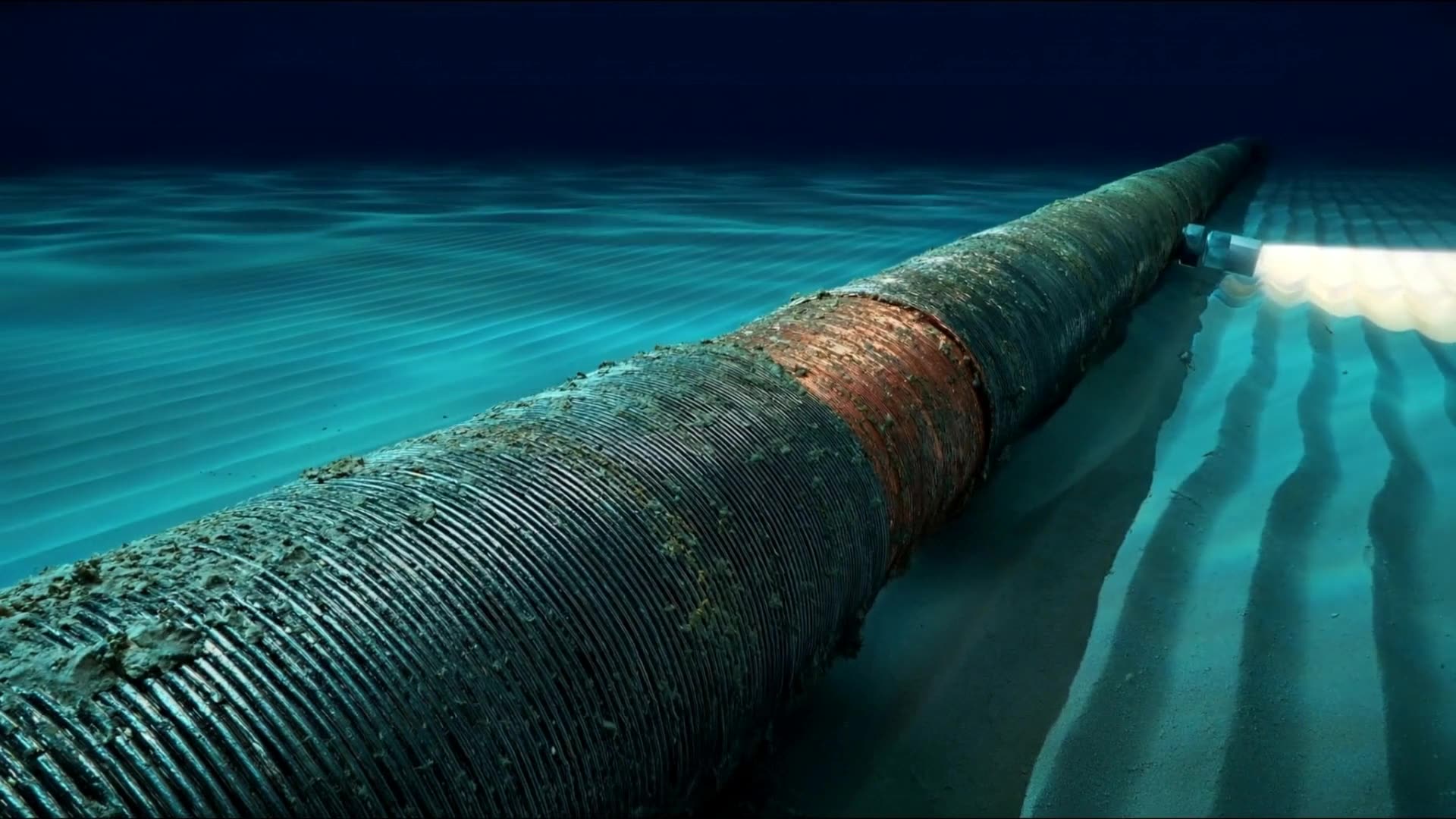
The shore-end cable, cut open. Scroll and the layers slide apart.
Film, scrubbed by your scroll
In the shallows it wears steel armour against anchors. Past the shelf the armour stops, and the cable that carries a continent's traffic is about as thick as a garden hose.